
Executive Summary
A leading power generation customer faced the risk of scrapping worn stainless steel stator segments due to the distortion risks of traditional welding. By leveraging advanced laser welding technology, we restored the inner diameter (ID) teeth to original dimensions with zero warping. The project bypassed costly pre and post-heat treatments, saving our customer significant time and manufacturing costs.
The advanced laser welding techniques that Phoenix Laser specializes in establish a full metallurgical bond matching precise tolerances for high-stress power generation environments.
Project
Laser Welding & Inspection
Application
Inner diameter teeth restoration
Industry
Power generation
The Challenge: Preventing Thermal Distortion in Critical Components
The project was to restore the worn ID teeth of a stator segment assembly by adding 0.025” of build-up per side. The primary hurdles traditionally faced in a project like this include:
- Extreme Heat Sensitivity: Conventional TIG or MIG welding processes introduce high, prolonged heat input. This threatened to warp and distort the stator ring profiles, rendering the parts useless.
- Replacement Costs: If traditional welding caused distortion, the client would be forced to manufacture completely new components from scratch, leading to large financial and even more critical, major schedule setbacks.
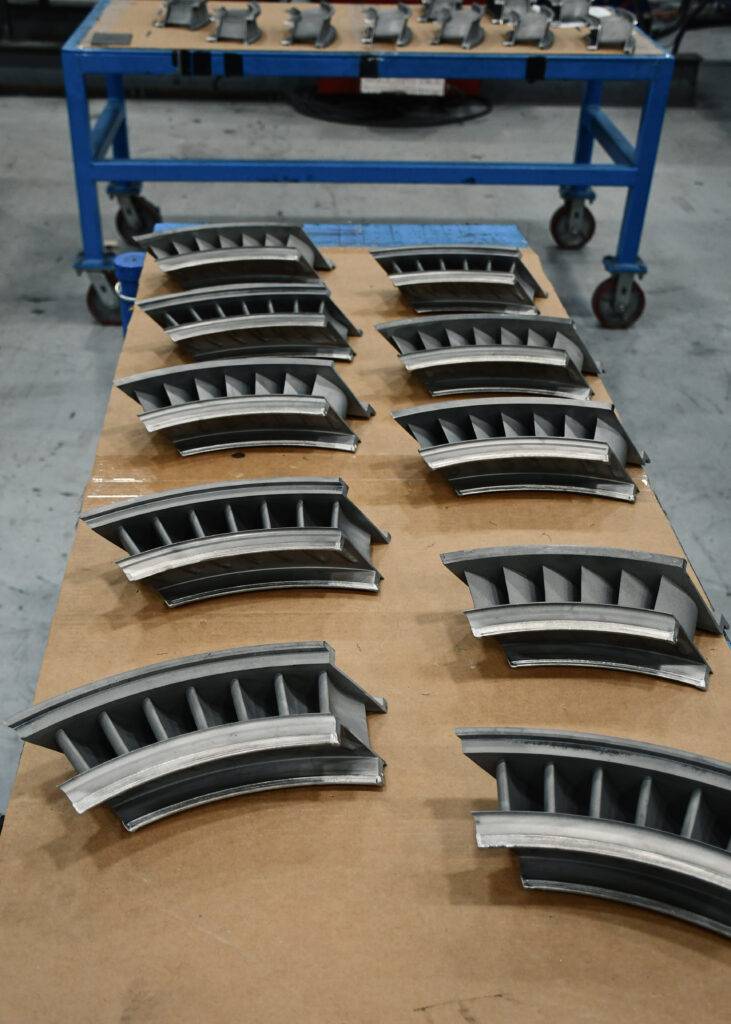
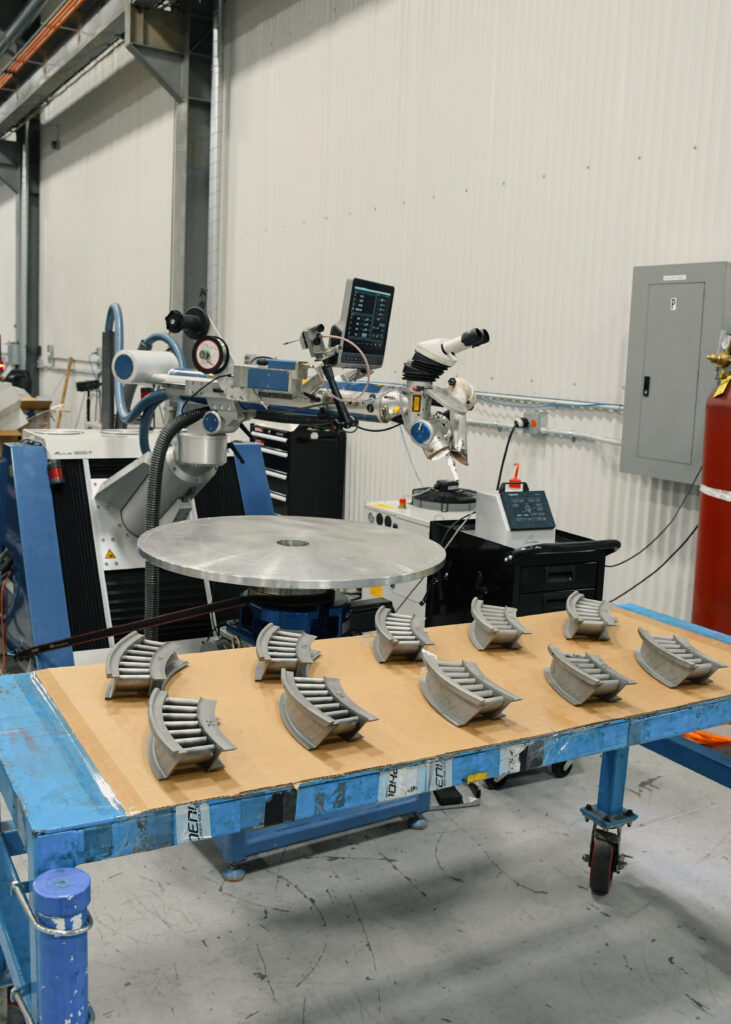
- Component Geometry: The parts arrived in separate segments, making it difficult to maintain flatness and structural alignment during a high-precision build-up process.
Technical Specifications
- Application: Inner Diameter (ID) teeth restoration
- Laser System: 1200W ALFlak Fiber Laser
- Base Material: 347 Stainless Steel
- Filler Material: 316L Stainless Steel Wire
- Required Build Up: 0.025” per side
Our Solution
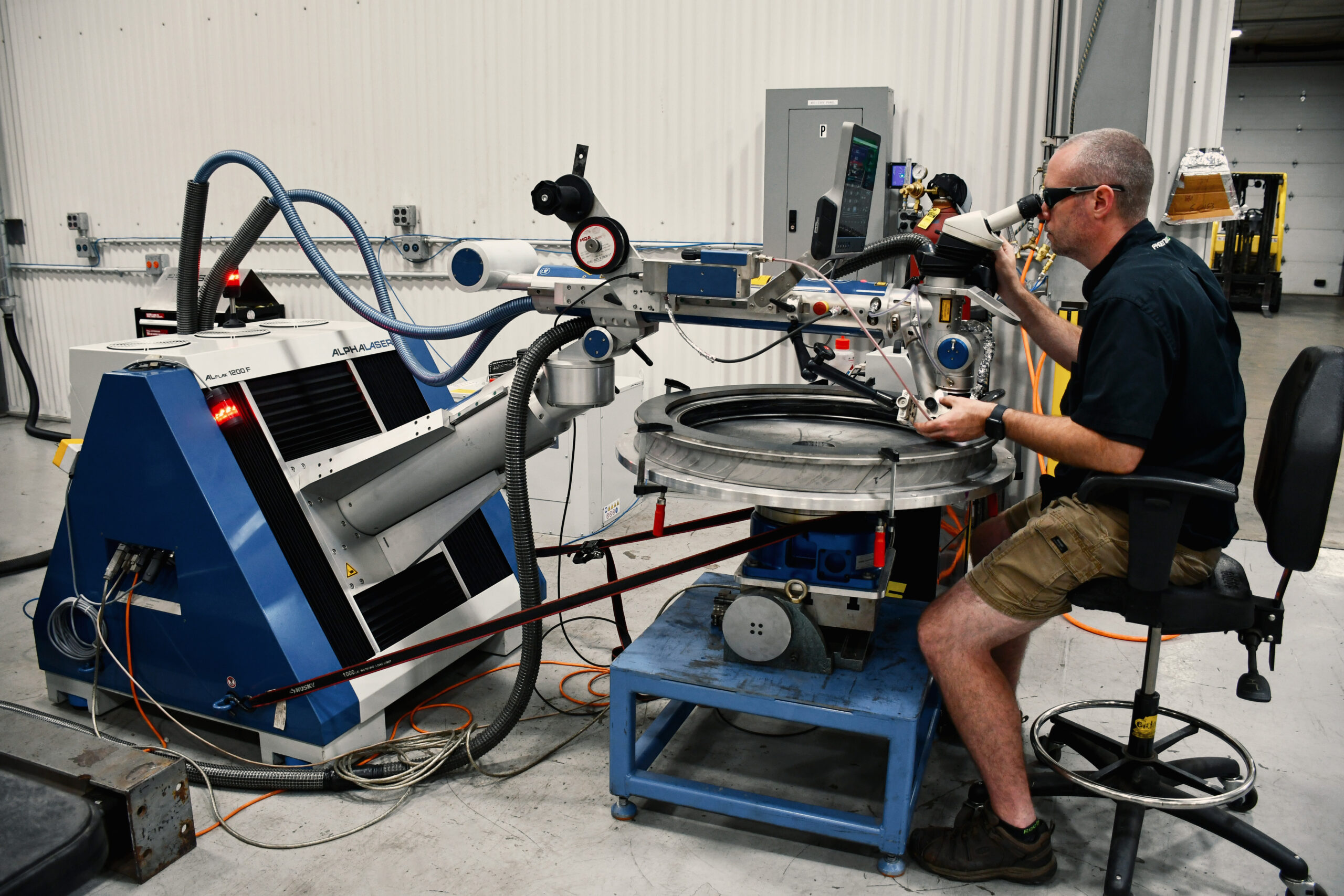
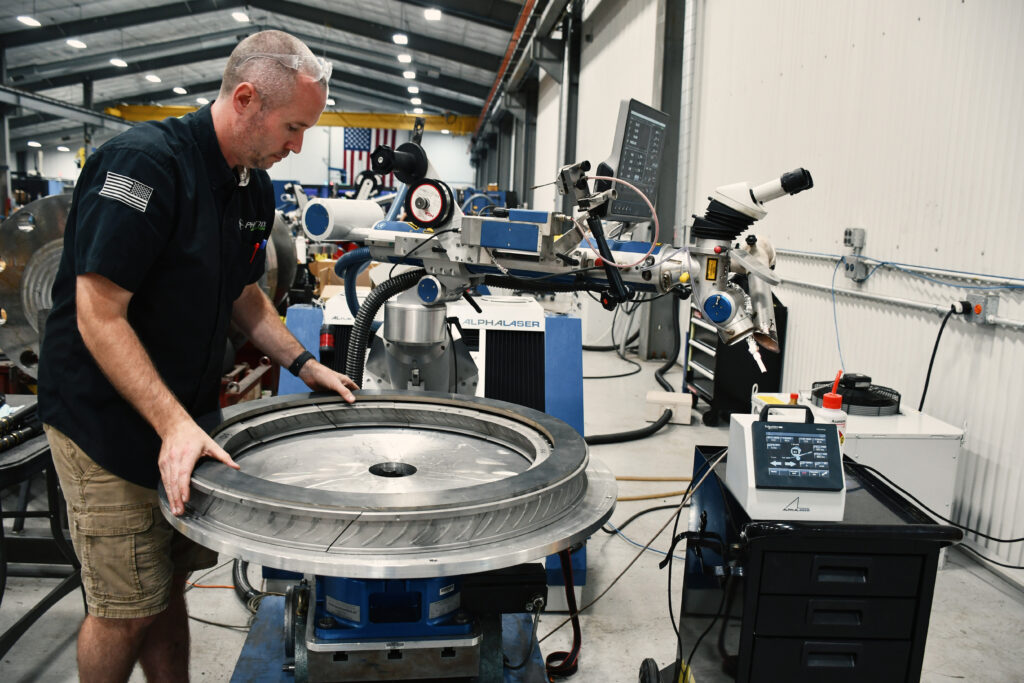
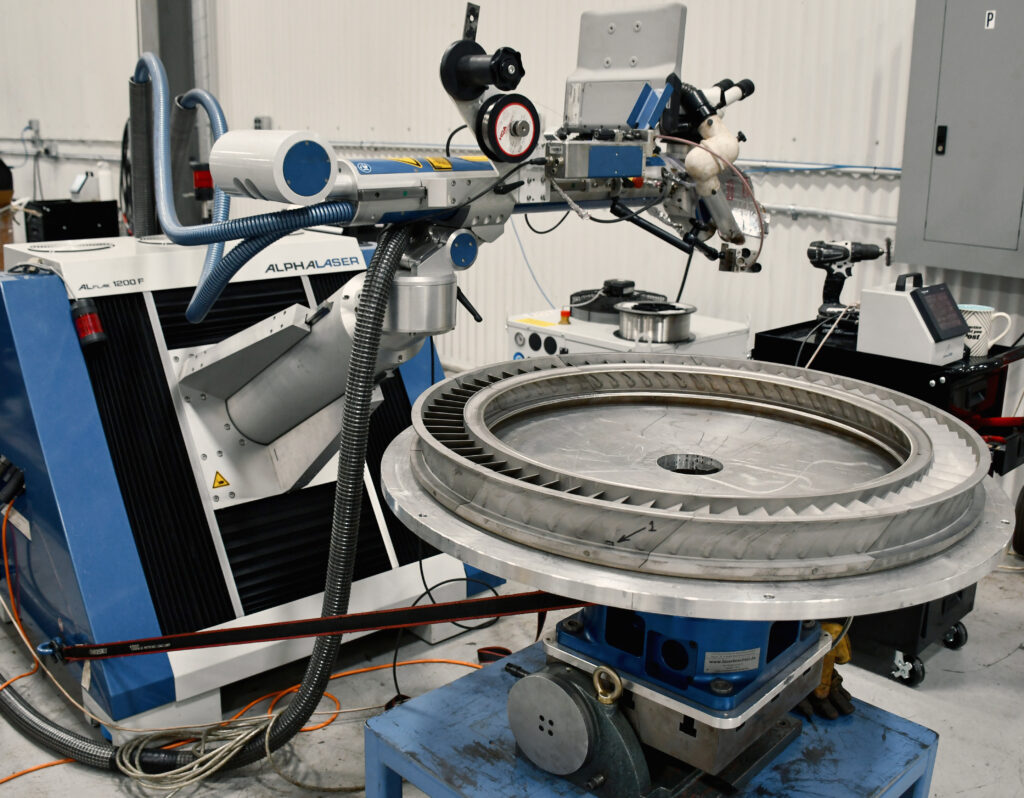
We developed a streamlined, low-heat weld repair workflow using our automated ALFlak 1200W laser welding system.
- 1. Tack welded each of the segments together to form a complete ring so that they could be laser welded with a rotary (automated welding).
- 2. Waterjet cut custom size fixture plates to assist in holding the pieces flat.
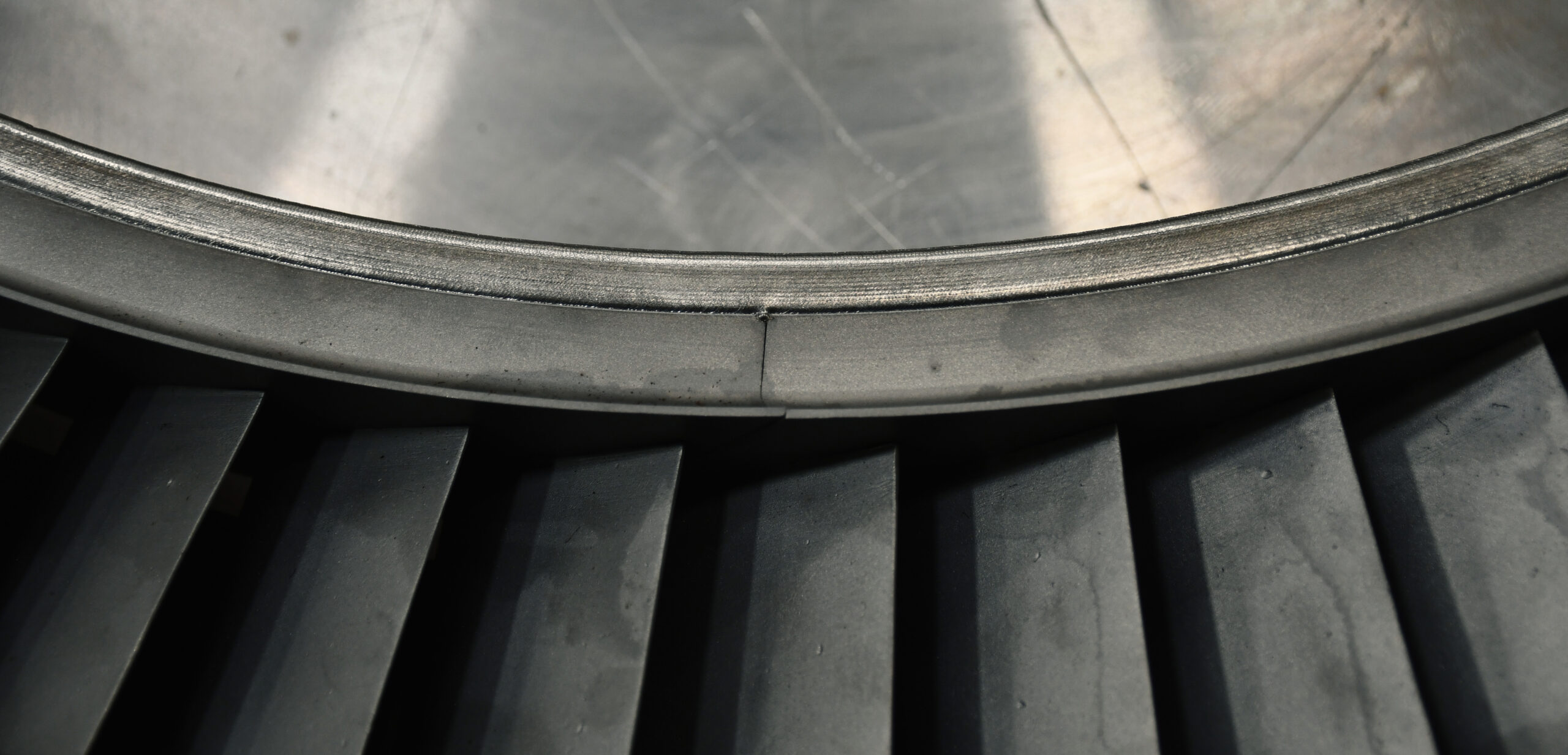
- 3. Laser welded with wire feeder around the full profile of the ID teeth to provide stock for machining and re-establish them to original shape.
- 4. Testing performed: 3D scanned to confirm sufficient build up.
Results
Our laser welding process provided many benefits for our customer:
- No Warpage: The exceptionally low heat input of the fiber laser completely prevented thermal distortion, eliminating the risk of scrapped parts.
- No Heat Treatments: Bypassing pre and post-weld heat treatment steps cut days off the standard repair timeline.
- Reduced Machining Cycle Times: Because the automated laser wire feeder deposits a highly precise, uniform layer of material, the client required minimal post-machining to bring the teeth back to spec.
- Substantial Cost Savings: Restoring the original stator segments via laser welding cost a fraction of the price of fabricating brand-new replacement assemblies.
Streamline your processes
Contact us today to discuss your custom laser repair needs and experience the Phoenix Laser difference!